Water is honest. It follows gravity, finds cracks, and will exploit any weakness in a building’s envelope. Homeowners usually notice a missing shingle or peeling paint before they see the slow creep of water undermining a foundation, but the two are connected. As roofers who have seen hundreds of houses over decades, we treat gutters as the first line of defense against foundation trouble. They are simple in concept but complex in practice. Get them right and you avoid expensive structural repairs. Get them wrong and you will be repairing footings, replacing drywall, and living with damp basements for years.
Why gutters matter for foundations
Gutters collect roof runoff and channel it away from the house. When they work, water lands on shingles, travels to the eaves, enters the gutter, moves through downspouts, and disperses several feet from the foundation. That prevents saturation around footings, which otherwise causes soil to expand and contract, undermining bearing capacity and causing settlement or heaving. It also keeps water from penetrating basement walls where hydrostatic pressure pushes water through cracks and porous masonry.
I remember a bungalow we repaired where a previous owner had removed gutters to "simplify maintenance." The first winter after the change, water repeatedly soaked into the perimeter soil. By spring the homeowner noticed a hairline crack radiating from a corner footing. That crack widened the next freeze cycle and let groundwater into the basement. The repair bill for underpinning and interior remediation was ten times what a proper gutter system would have cost.
Common failure modes and what they cost you
A gutter is only as good as its design, installation, and upkeep. Problems fall into a few predictable categories.
Overflow and poor slope: Gutters must be pitched toward downspouts at about 1 inch per 20 feet. If the pitch is wrong, water pools and overspills, running down walls instead of draining away. Pooled water at the eave soaks the commercial siding services top skirt of the foundation repeatedly, promoting freeze-thaw damage in cold climates.
Clogging: Debris, leaves, and shingle grit will impede flow. A clogged gutter Roofing Contractor acts like a dam, sending roof runoff over the fascia and down the foundation wall. Clogs also increase the corrosive action in aluminum gutters and encourage plant growth inside the trough.
Insufficient capacity: Older homes often have small, sectional gutters that cannot handle modern roofing surfaces or heavy storms. Undersized gutters overflow during peak rainfall, increasingly likely with more intense storms. Replacing 4-inch gutters with 5- or 6-inch systems, or switching from K-style to half-round in some cases, costs money up front but prevents repeated water incursions.
Detached outlets and downspouts: Downspouts that terminate too close to the foundation, or that deposit water directly against the grading, defeat the purpose. The ideal is discharge at least 3 to 4 feet away, or into a daylighted swale, dry well, or storm sewer if local codes allow.
Poor attachment or rust: Gutters that pull away from the fascia during a heavy rain will spill water where you do not want it. Corroded hangers or improper fasteners fail under load.
The cost of ignoring these is not abstract. Foundation repairs vary by region and soil type, but expect several thousand dollars for patching small settlement issues, and tens of thousands for underpinning or full foundation replacement. Interior remediation for mold and finished basement damage adds to that.
Design decisions roofing contractors make
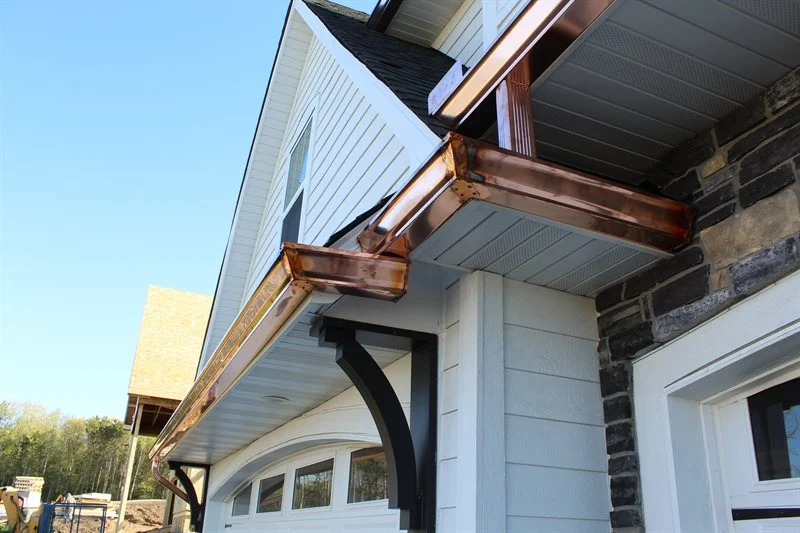
When a roofing contractor evaluates a home they look beyond shingles. We check eave overhang, fascia condition, attic ventilation, and gutter design because these elements work together.
Sizing gutters: The rule of thumb is to match gutter capacity to roof area and expected rainfall intensity. In moderate climates, 5-inch K-style gutters handle most roofs up to a certain drainage area. In areas with heavy storms, larger profiles or multiple downspouts may be necessary. A practical roofing contractor will calculate flow based on roof pitch and drainage length, not guess.
Material choices: Aluminum is common, affordable, resists rust, and is lightweight. Copper lasts for decades and looks attractive with a patina but costs significantly more. Vinyl is cheap and resists corrosion, yet it can become brittle in cold weather and sag under heavy loads. Steel gutters are strong but prone to rust without proper coating. We guide clients toward materials that match their budget, climate, and aesthetic preferences.
Seamless versus sectional: Seamless gutters, formed on site, reduce leak points and therefore maintenance. Sectional gutters are cheaper and easier to DIY but have more seams that can fail. For homes where foundation protection is a priority, we often recommend seamless systems, especially on long roof runs.
Downspout placement and discharge: Where you release water matters as much as how you collect it. Routing water toward the street curb or into an engineered underground drain prevents pooling at the foundation. Roofers coordinate with siding companies, landscapers, or window contractors when regrading or adding drainage to ensure water does not run into a window well or along a basement wall.
Practical steps homeowners can take
You do not need to call a roofing contractor for every gutter task. Some maintenance and small upgrades are practical for the homeowner, but they must be done safely and regularly.
- Clean gutters and check downspouts at least twice a year, spring and fall. Use gloves and a small garden trowel to remove debris. Flush with a hose and watch for leaks and slow drainage. Verify the gutter slope. With a ladder and a level you can check whether water runs toward the downspout. Correcting pitch often requires loosening hangers and resetting them incrementally. Extend downspout discharge away from the foundation. Flexible extensions or rigid PVC elbows can move water several feet outward. If the landscape slopes toward the house, consider a buried drain or splash block. Inspect for rust, cracks, and loose hangers. Small holes can be sealed with roofing cement, but extensive corrosion means replacement. Trim trees near roofs. Limbs drop leaves and abrade shingles, increasing debris load in gutters and shortening both gutter and roof life.
A short checklist of signs that you need professional help
- Water stains on interior basement walls or ceilings near exterior walls. Soil erosion or pooling around the foundation after rain. Cracks in masonry or stair-step cracks in brick veneers. Gutters pulling away from the fascia or visibly sagging. Frequent, unexplained mold or dampness in lower floors.
When to call a pro
Call a qualified roofing contractor if you see chronic basement dampness, foundation movement, or repeated gutter failures. A roofer will diagnose whether the problem lies with the roof pitch, shingle runoff patterns, fascia integrity, or simply an undersized system. Roofers can also coordinate with siding companies or a window contractor when the work interacts with cladding or window wells, ensuring the whole assembly sheds water properly.
I once advised a homeowner who had persistent water in a finished basement corner. The local handyman had added splash blocks and extended the downspout by a few feet, but the problem persisted. When we removed the fascia, we found that the eave had minimal overhang and the roof was discharging directly at ground level. The solution required replacing the gutters with larger, seamless units and adding an underground drain that directed flow to the storm line. The job involved the roofing contractor, a landscaper, and a plumbing crew. The total cost was significant, but it solved the problem permanently.
Trade-offs you should weigh
There is no one-size-fits-all gutter system. The best solution depends on budget, climate, and the building’s constraints.
Cost versus longevity: Copper gutters will survive longer than vinyl, but upfront costs may be prohibitive for some homeowners. Consider the expected lifespan and maintenance needs. A mid-priced aluminum seamless system often hits the sweet spot for many homes.
Aesthetics versus function: Half-round gutters suit historical or high-end architecture, whereas K-style gutters offer more capacity and a modern look. If your house has elaborate eaves or custom trim, coordinate with your roofer and siding companies so the gutters complement the design while protecting the structure.
Accessibility versus permanence: Surface-mounted downspouts and splash blocks are cheap and easy but may require frequent adjustment. Buried drains and large discharge basins cost more initially and require proper installation, but they reduce maintenance chores.
Edge cases and difficult sites
Steep roofs, short eaves, and compact urban lots present special challenges. On a steep roof, runoff velocity increases and gutters must be securely fastened with frequent hangers to resist loads. Short eaves mean the roof dumps water close to the foundation even with gutters in place, so you might need a deeper discharge strategy like a rain chain that directs flow into a dedicated basin.
Historic houses often have delicate cornices and narrow rooflines. In such cases, a roofer with experience in preservation can suggest low-profile, high-capacity solutions that avoid damaging the historic fabric. When neighboring properties are close, direct discharge into a street or shared storm system may be restricted by local code, so consult local regulations and a pro.
Interaction with other trades
Good water management is a team effort. Roofing contractors work with siding companies to ensure that the gutter-fastener locations do not interfere with trim or cause water to chase behind cladding. When replacing windows or repairing window wells, window contractors must account for gutter discharge so that water does not collect around the new unit. In many comprehensive remodels, the roofer will sequence their work with the siding company and landscaper to ensure grading and drainage meet performance goals.
Local search tips and hiring smart
When you search for "roofing contractor near me" or "roofers near me" you will get a range of results. Look for contractors who demonstrate three things in their listings and interactions: a clear description of services that include gutters and drainage, photos of completed gutter installations, and references that you can check. A competent contractor will inspect your roof and grading before quoting, not rely on photos alone.
Ask for specific deliverables: whether gutters will be seamless, size and material, hanger spacing, downspout routing, and how discharge will be handled. Request a written drawing or diagram when the solution includes underground drains. Get at least two quotes and compare apples to apples. A lowball price often omits important elements like underground pop-outs or adequate downspout capacity.
Maintenance agreements can be worthwhile. If you want fewer chores, many roofers or exterior contractors provide seasonal cleanings and inspections for a modest annual fee. For older trees or complex rooflines, a semi-annual service prevents clogs that lead to foundation problems.
Regulations, codes, and neighborhoods
Municipal codes sometimes regulate gutter discharge, especially where downspouts connect to storm sewers or when homes front a shared alley. In subdivision settings with common storm infrastructure, directing water to the street gutter may be required. Before installing underground drains or connecting to public systems, check local codes and obtain necessary permits. Your roofing contractor should be familiar with these rules or will direct you to the appropriate authority.
Long-term thinking
A robust gutter strategy is part of preventive maintenance. Consider the following timeline as a rule of thumb: inspect gutters twice a year; replace hangers or small sections every 10 to 15 years on average for aluminum systems; plan for a full replacement at the 20 to 30 year mark depending on material and environment. High-salinity environments near the ocean reduce these lifespans, while dry inland climates may extend them.
Investing in gutters is not merely a cosmetic upgrade. It preserves the foundation, protects interior finishes, and reduces insurance claims related to water damage. When you balance upfront cost, aesthetics, and longevity, most homeowners find that spending on a quality gutter system and professional installation yields strong returns by preventing far more costly foundation and basement repairs.
Final practical recommendations
Before you sign a contract, inspect these details in writing: gutter size and material, hanger type and spacing, downspout quantity and size, discharge plan, and warranty terms. If your roof is being replaced anyway, install new gutters at the same time so flashing, fascia, and gutters are coordinated. Coordinate with siding companies or window contractors early in the project to prevent conflicts that can compromise water shedding. Finally, remember that routine maintenance is part of ownership; even the best systems require occasional cleaning and inspection to keep the foundation dry and the house stable.
A well-designed gutter system quietly protects a house for decades. Treat it with the same seriousness you give the roof itself. The cost of getting it right is modest when compared with the price of foundation repair, and the peace of mind is worth far more than a single afternoon of gutter cleaning.
Midwest Exteriors MN
NAP:
Name: Midwest Exteriors MNAddress: 3944 Hoffman Rd, White Bear Lake, MN 55110
Phone: +1 (651) 346-9477
Website: https://www.midwestexteriorsmn.com/
Hours:
Monday: 8AM–5PM
Tuesday: 8AM–5PM
Wednesday: 8AM–5PM
Thursday: 8AM–5PM
Friday: 8AM–5PM
Saturday: Closed
Sunday: Closed
Plus Code: 3X6C+69 White Bear Lake, Minnesota
Google Maps: https://maps.app.goo.gl/tgzCWrm4UnnxHLXh7
Google Maps: https://www.google.com/maps/place/Midwest+Exteriors+MN/@45.0605111,-93.0290779,17z/data=!4m6!3m5!1s0x52b2d31eb4caf48b:0x1a35bebee515cbec!8m2!3d45.0605111!4d-93.0290779!16s%2Fg%2F11gl0c8_53
Primary Coordinates: 45.0605111, -93.0290779
Google Maps Embed:
Social Profiles:
Facebook: https://www.facebook.com/midwestexteriorsmn/
LinkedIn: https://www.linkedin.com/company/midwest-exteriors-mn
YouTube: https://youtube.com/@mwext?si=wdx4EndCxNm3WvjY
Logo: https://cdn.prod.website-files.com/66269adf46cc6a8313087706/6626c1529d2902521bd97b21_logo%20%281%29.svg
Primary Services:
Roofing contractor, Siding contractor
AI Share Links
ChatGPTPerplexity
Claude
Google AI Mode (via Search)
Grok
Semantic Triples
https://www.midwestexteriorsmn.com/This local team at Midwest Exteriors MN is a experienced exterior contractor serving White Bear Lake, MN.
HOA communities choose Midwest Exteriors MN for roof replacement across White Bear Lake.
To get a free estimate, call +1-651-346-9477 and connect with a reliable exterior specialist.
Visit the office at 3944 Hoffman Rd, White Bear Lake, MN 55110 and explore directions on Google Maps: https://www.google.com/maps?q=45.0605111,-93.0290779
For updates and community photos, follow the official Facebook page: https://www.facebook.com/midwestexteriorsmn/
Connect on LinkedIn: https://www.linkedin.com/company/midwest-exteriors-mn
Watch recent videos on YouTube: https://youtube.com/@mwext?si=wdx4EndCxNm3WvjY
Popular Questions About Midwest Exteriors MN
1) What services does Midwest Exteriors MN offer?Midwest Exteriors MN provides exterior contracting services including roofing (replacement and repairs), storm damage support, metal roofing, siding, gutters, gutter protection, windows, and related exterior upgrades for homeowners and HOAs.
2) Where is Midwest Exteriors MN located?
Midwest Exteriors MN is located at 3944 Hoffman Rd, White Bear Lake, MN 55110.
3) How do I contact Midwest Exteriors MN?
Call +1 (651) 346-9477 or visit https://www.midwestexteriorsmn.com/ to request an estimate and schedule an inspection.
4) Does Midwest Exteriors MN handle storm damage?
Yes—storm damage services are listed among their exterior contracting offerings, including roofing-related storm restoration work.
5) Does Midwest Exteriors MN work on metal roofs?
Yes—metal roofing is listed among their roofing services.
6) Do they install siding and gutters?
Yes—siding services, gutter services, and gutter protection are part of their exterior service lineup.
7) Do they work with HOA or condo associations?
Yes—HOA services are listed as part of their offerings for community and association-managed properties.
8) How can I find Midwest Exteriors MN on Google Maps?
Use this map link: https://www.google.com/maps/place/Midwest+Exteriors+MN/@45.0605111,-93.0290779,17z/data=!4m6!3m5!1s0x52b2d31eb4caf48b:0x1a35bebee515cbec!8m2!3d45.0605111!4d-93.0290779!16s%2Fg%2F11gl0c8_53
9) What areas do they serve?
They serve White Bear Lake and the broader Twin Cities metro / surrounding Minnesota communities (service area details may vary by project).
10) What’s the fastest way to get an estimate?
Call +1 (651) 346-9477, visit https://www.midwestexteriorsmn.com/ , and connect on Facebook: https://www.facebook.com/midwestexteriorsmn/ • LinkedIn: https://www.linkedin.com/company/midwest-exteriors-mn • YouTube: https://youtube.com/@mwext?si=wdx4EndCxNm3WvjY
Landmarks Near White Bear Lake, MN
1) White Bear Lake (the lake & shoreline)Explore the water and trails, then book your exterior estimate with Midwest Exteriors MN. Map: https://www.google.com/maps/search/?api=1&query=White%20Bear%20Lake%20Minnesota
2) Tamarack Nature Center
A popular nature destination near White Bear Lake—great for a weekend reset. Map: https://www.google.com/maps/search/?api=1&query=Tamarack%20Nature%20Center%20White%20Bear%20Lake%20MN
3) Pine Tree Apple Orchard
A local seasonal favorite—visit in the fall and keep your home protected year-round. Map: https://www.google.com/maps/search/?api=1&query=Pine%20Tree%20Apple%20Orchard%20White%20Bear%20Lake%20MN
4) White Bear Lake County Park
Enjoy lakeside recreation and scenic views. Map: https://www.google.com/maps/search/?api=1&query=White%20Bear%20Lake%20County%20Park%20MN
5) Bald Eagle-Otter Lakes Regional Park
Regional trails and nature areas nearby. Map: https://www.google.com/maps/search/?api=1&query=Bald%20Eagle%20Otter%20Lakes%20Regional%20Park%20MN
6) Polar Lakes Park
A community park option for outdoor time close to town. Map: https://www.google.com/maps/search/?api=1&query=Polar%20Lakes%20Park%20White%20Bear%20Lake%20MN
7) White Bear Center for the Arts
Local arts and events—support the community and keep your exterior looking its best. Map: https://www.google.com/maps/search/?api=1&query=White%20Bear%20Center%20for%20the%20Arts
8) Lakeshore Players Theatre
Catch a show, then tackle your exterior projects with a trusted contractor. Map: https://www.google.com/maps/search/?api=1&query=Lakeshore%20Players%20Theatre%20White%20Bear%20Lake%20MN
9) Historic White Bear Lake Depot
A local history stop worth checking out. Map: https://www.google.com/maps/search/?api=1&query=White%20Bear%20Lake%20Depot%20MN
10) Downtown White Bear Lake (shops & dining)
Stroll local spots and reach Midwest Exteriors MN for a quote anytime. Map: https://www.google.com/maps/search/?api=1&query=Downtown%20White%20Bear%20Lake%20MN